A quantised approach to formal group interactions of hominidae (size > 2)

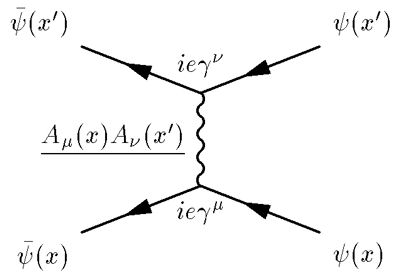
Much as he liked to debunk the field, I always thought that photon paths in Feynman diagrams presaged elements of String Theory

I am very excited to be able to report that I have taken a major step forward in expanding our understanding of the universe. The paper has been lodged on arXiv.org and it is only a matter of time before the Nobel Committee gets round to calling.

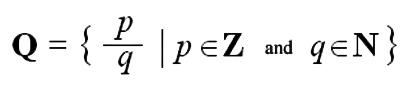
I have established that the fundamental element of time (at least between 9am and 5pm Monday to Friday) can exist only in pre-determined, discrete quantities. Furthermore I have shown that these also have a minimum value, with all other quantities being multiples of this. More conventional (aka hidebound) researchers would slavishly adhere to established, but outmoded, protocol and allocate this minimum quantity the number 1. I have been braver and less mentally constrained than my more quotidian colleagues in deciding to associate the number ½ with this quantity. My reasoning for this is that while quantum numbers of 1, 2, 3 and so on are regularly observed, those consisting of an odd multiple (n > 1) of the minimum value are rarer that free lunches.

However, I have left the most exciting finding until last. I have rigorously calculated the value of the initial quantum number. My work determines beyond any doubt that this is 1.8 x 10⁹ µs (p < 0.003). I have modestly called this fundamental building block of nature Peter’s Constant and – as is customary – selected an appropriate Greek letter to represent it. The first letter of my name is ‘P’ and the Greek letter for ‘P’ is π, so I have naturally adopted this.

I believe that there may be some other antiquated use for this letter, but am confident that the importance of my discoveries are such that π will soon come to be associated only with its more relevant (albeit slightly newer) meaning and justice will have been seen to be done.

Congratulatory telegrams, bouquets of flowers and magna of Champagne (one of my hobbies is Latin plurals and Bollinger would be nice) may be sent to the normal address.


With acknowledgements to S. L. Cooper PhD – Department of Theoretical Physics, California Institute of Technology, Pasadena, CA 91125, USA – without whose inspiration this work would not have been possible.

Using historical data to justify BI investments – Part II

The earliest recorded surd

This article is the second in what has now expanded from a two-part series to a three-part one. This started with Using historical data to justify BI investments – Part I and finishes with Using historical data to justify BI investments – Part III (once again exhibiting my talent for selecting buzzy blog post titles).
 
 
Introduction and some belated acknowledgements

The intent of these three pieces is to present a fairly simple technique by which existing, historical data can be used to provide one element of the justification for a Business Intelligence / Data Warehousing programme. Although the specific example I will cover applies to Insurance (and indeed I spent much of the previous, introductory segment discussing some Insurance-specific concepts which are referred to below), my hope is that readers from other sectors (or whose work crosses multiple sectors) will be able to gain something from what I write. My learnings from this period of my career have certainly informed my subsequent work and I will touch on more general issues in the third and final section.

This second piece will focus on the actual insurance example. The third will relate the example to justifying BI/DW programmes and, as mentioned above, also consider the area more generally.

Before starting on this second instalment in earnest, I wanted to pause and mention a couple of things. At the beginning of the last article, I referenced one reason for me choosing to put fingertip to keyboard now, namely me briefly referring to my work in this area in my interview with Microsoft’s Bruno Aziza (@brunoaziza). There were a couple of other drivers, which I feel rather remiss to have not mentioned earlier.

First, James Taylor (@jamet123) recently published his own series of articles about the use of BI in Insurance. I have browsed these and fully intend to go back and read them more carefully in the near future. I respect James and his thoughts brought some of my own Insurance experiences to the fore of my mind.

Second, I recently posted some reflections on my presentation at the IRM MDM / Data Governance seminar. These focussed on one issue that was highlighted in the post-presentation discussion. The approach to justifying BI/DW investments that I will outline shortly also came up during these conversations and this fact provided additional impetus for me to share my ideas more widely.
 
 
Winners and losers

Before him all the nations will be gathered, and he will separate them one from another, as a shepherd separates the sheep from the goats

The main concept that I will look to explain is based on dividing sheep from goats. The idea is to look at a set of policies that make up a book of insurance business and determine whether there is some simple factor that can be used to predict their performance and split them into good and bad segments.

In order to do this, it is necessary to select policies that have the following characteristics:

  1. Having been continuously renewed so that they at least cover a contiguous five-year period (policies that have been “in force” for five years in Insurance parlance).

    The reason for this is that we are going to divide this five-year term into two pieces (the first three and the final two years) and treat these differently.

  2. Ideally with the above mentioned five-year period terminating in the most recent complete year – at the time of writing 2010.

    This is so that the associated loss ratios better reflect current market conditions.

  3. Being short-tail policies.

    I explained this concept last time round. Short-tail policies (or lines or business) are ones in which any claims are highly likely to be reported as soon as they occur (for example property or accident insurance).

    These policies tend to have a low contribution from IBNR (again see the previous piece for a definition). In practice this means that we can use the simplest of the Insurance ratios, paid loss-ratio (i.e. simply Claims divided by Premium), with some confidence that it will capture most of the losses that will be attached to the policy, even if we are talking about say 2010.

    Another way of looking at this is that (borrowing an idea discussed last time round) for this type of policy the Underwriting Year and Calendar Year treatments are closer than in areas where claims may be reported many years after the policy was in force.

Before proceeding further, it perhaps helps to make things more concrete. To achieve this, you can download a spreadsheet containing a sample set of Insurance policies, together with their premiums and losses over a five-year period from 2006 to 2010 by clicking here (this is in Office 97-2003 format – if you would prefer, there is also a PDF version available here). Hopefully you will be able to follow my logic from the text alone, but the figures may help.

A few comments about the spreadsheet. First these are entirely fabricated policies and are not even loosely based on any data set that I have worked with before. Second I have also adopted a number of simplifications:

  1. There are only 50 policies, normally many thousand would be examined.
  2. Each policy has the same annual premium – £10,000 (I am British!) – and this premium does not change over the five years being considered. In reality these would vary immensely according to changes in cover and the insurer’s pricing strategy.
  3. I have entirely omitted dates. In practice not every policy will fit neatly into a year and account will normally need to be taken of this fact.
  4. Given that this is a fabricated dataset, the claims activity has not been generated randomly. Instead I have simply selected values (though I did perform a retrospective sense check as to their distribution). While this example is not meant to 100% reflect reality, there is an intentional bias in the figures; one that I will come back to later.

The sheet also calculates the policy paid loss ratio for each year and figures for the whole portfolio appear at the bottom. While the in-year performance of any particular policy can gyrate considerably, it may be seen from the aggregate figures that overall performance of this rather small book of business is relatively consistent:

Year Paid Loss Ratio
2006 53%
2007 59%
2008 54%
2009 53%
2010 54%
Total 54%

Above I mentioned looking at the five years in two parts. At least metaphorically we are going to use our right hand to cover the results from years 2009 and 2010 and focus on the first three years on the left. Later – after we have established a hypothesis based on 2006 to 2008 results – we can lift our hand and check how we did against the “real” figures.

For the purposes of this illustration, I want to choose a rather mechanistic way to differentiate business that has performed well and badly. In doing this I have to remember that a policy may have a single major loss one year and then run free of losses for the next 20. If I was simply to say any policy with a large loss is bad, I am potentially drastically and unnecessarily culling my book (and also closing the stable door after the horse has bolted). Instead we need to develop a rule that takes this into account.

In thinking about overall profitability, while we have greatly reduced the impact of both reported but unpaid claims and IBNR by virtue of picking a short-tail business, it might be prudent to make say a 5% allowance for these. If we also assume an expense ratio of 35%, then we have a total of non-underwriting-related outgoings of 40%. This means that we can afford to have a paid loss ratio of up to 60% (100% – 40%) and still turn a profit.

Using this insight, my simple rule is as follows:

A policy will be tagged as “bad” if two things occur:

  1. The overall three-year loss ratio is in excess of 60%

    i.e. is has been unprofitable over this period; and

  2. The loss ratio is in excess of 30% in at least two of the three years

    i.e. there is a sustained element to the poor performance and not just the one-off bad luck that can hit the best underwritten of policies

This rule roughly splits the book 75 / 25; with 74% of policies being good. Other choices of parameters may result in other splits and it would be advisable spending a little time optimising things. Perhaps 26% of policies being flagged as bad is too aggressive for example (though this rather depends on what you do about them – see below). However in the simpler world of this example, I’ll press on to the next stage with my first pick.
The ultimate sense of perspective

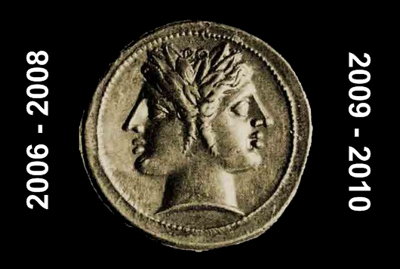
Well all we have done so far is to tag policies that have performed badly – in the parlance of Analytics zealots we are being backward-looking. Now it is time to lift our hand on 2009 to 2010 and try to be forward-looking. While these figures are obviously also backward looking (the day that someone comes up with future data I will eat my hat), from the frame of reference of our experimental perspective (sitting at the close of 2008), they can be thought of as “the future back then”. We will use the actual performance of the policies in 2009 – 2010 to validate our choice of good and bad that was based on 2006 – 2008 results.

Overall the 50 policies had a loss ratio of 54% in 2009 – 2010. However those flagged as bad in our above exercise had a subsequent loss ratio of 92%. Those flagged as good had a subsequent loss ratio of 40%. The latter is a 14 point improvement on the overall performance of the book.

So we can say with some certainly that our rule, though simplistic, has produced some interesting results. The third part of this series will focus more closely on why this has worked. For now, let’s consider what actions the split we have established could drive.
 
 
What to do with the bad?

You shall be taken to the place from whence you came...

We were running a 54% paid ratio in 2009-2010. Using the same assumptions as above, this might have equated to a 94% combined ratio. Our book of business had an annual premium of £0.5m so we received £1m over the two years. The 94% combined would have implied making a £60k profit if we had done nothing different. So what might have happened if we had done something?

There are a number of options. The most radical of these would have been to not renew any of the bad policies; to have carried out a cull. Let us consider what would have been the impact of such an approach. Well our book of business would have shrunk to £740k over the two years at a combined of 40% (the ratio of the good book) + 40% (other outgoing) = 80%, which implies a profit of £148k, up £88k. However there are reasons why we might not have wanted to so drastically shrink our business. A smaller pot of money for investment purposes might have been one. Also we might have had customers with policies in both the good and bad segments and it might have been tricky to cancel the bad while retaining the good. And so on…

Another option would have been to have refined our rule to catch fewer policies. Inevitably, however, this would have reduced the positive impact on profits.

At the other extreme, we might have chosen to take less drastic action relating to the bad policies. This could have included increasing the premium we charged (which of course could also have resulted in us losing the business but via the insured’s choice), raising the deductible payable on any losses, or looking to work with insureds to put in place better risk management processes. Let’s be conservative and say that if the bad book was running at 92% and the overall book at 54% then perhaps it would have been feasible to improve the bad book’s performance to a neutral figure of say 60% (implying a break-even combined of 100%). This would have enabled the insurance organisation to maintain its investment base, to have not lost good business as a result of culling related bad and to have preserved the profit increase generated by the cull.

In practice of course it is likely that some sort of mixed approach would have been taken. The general point is that we have been able to come up with a simple strategy to separate good and bad business and then been able to validate how accurate our choices were. If, in the future, we possessed similar information, then there is ample scope for better decisions to be taken, with potentially positive impact on profits.
 
 
Next time…

In the final part of what is now a trilogy, I will look more deeply at what we have learnt from the above example, tie these learnings into how to pitch a BI/DW programme in Insurance and make some more general observations.
 

Using historical data to justify BI investments – Part I

The earliest recorded surd

This is the first of what was originally a two part piece that has now expanded into three. In the initial chapter, I provide some background on Insurance industry concepts and practices. These are built on in the second chapter (Using historical data to justify BI investments – Part II), in which I offer an Insurance-based worked example. In the final piece, which is cunningly named Part III, I will explain how such an approach to analysing historical data can be used to justify BI investments.

Readers who are already au fait with insurance may choose to wait for the next instalment.

Introduction

Quite some time ago, when I wrote Measuring the Benefits of Business Intelligence, I mentioned that, in some circumstances, I had been able to leverage historical data (is there any other kind?) to justify Business Intelligence investments. I briefly touched on this area in my recent interview with Microsoft’s Bruno Aziza (@brunoaziza) and thought that it was well past time me writing more fully on the topic.

My general approach applies where there are periodic decisions to be made about a business relationship and where how that relationship has performed in the past informs these decisions. These criteria particularly pertain to the industry in which I ran my first BI / DW project; commercial property and casualty insurance. While I hope that users from other sectors may be able to extrapolate my example to apply to them, it is to insurance that I will turn to explain what I did.

An insurance primer

I have always wanted to launch a '[...] for Pacifiers' series in the US

My previous article, The Specific Benefits of Business Intelligence in Insurance, starts with a widely used and pig-related (no typo) explanation of how insurance works, both for the insurer and the insured. I won’t repeat this here, but if you are unfamiliar with the area I recommend you taking a look first.

Although of course there are exceptions (event related insurance for example), many commercial insurance policies – just like those that most of us purchase in our personal lives to cover cars and property – have an annual term after which either party can decide whether or not to renew the cover. At renewal, as in the pig example, the insurer will first of all want to assess whether or not they have received more money than they have paid out over the past year. However, the entire point of insurance is that sometimes an event occurs which requires the insurer to give the insured a sum in excess of the premium that they have paid in a given year (or indeed over many years). The insurer is therefore less interested in whether a particular year has been bad – from their perspective – than whether the overall relationship has been, or will become, bad. Perhaps I am over simplifying, but if in most years the insurer pays out less in settling claims than they receive in premium (or ideally there are no claims at all) and if one bad year’s claims are unlikely to negate the benefits accrued in the normal years, then this is good business for the insurer.

Some rational comments

The intuitive mind is a sacred gift and the rational mind is a faithful servant. We have created a society that honors the servant and has forgotten the gift

I have bandied about a number of rather woolly concepts in the previous section which include: how much money the insured has paid out and how much they have taken in. Of course these things tend to be more complicated. On the simpler side of the equation, broadly speaking, money coming in is from the insurance premiums paid by customers (but see also the box appearing below).

Investment income

Some insurers are actually relatively relaxed about paying out more in claims that they receive in premium over the life of a policy. This is because of timing differences. So long as the claims are settled some time after premium is received and so long as there are relatively lucrative investment opportunities (remember that?), it may be that the investment income that the insurer can generate while it has use of the insured’s premium will more than compensate for what might be termed an operating loss on the policy. Equally some insurers will have the business goal of – at least in aggregate – always having premiums exceeding claims and thus making a profit on their core underwriting activities. In this case any investment income is added to the underwriting-related profits, rather than compensating for underwriting-related losses. I won’t complicate this article any further by including investment income, but it is a factor in the profitability of insurance companies.

Equally broadly speaking, money going out is normally in six categories:

  1. settlement of claims – often referred to as case payments
  2. claims adjusters’ estimates for the settlement of specific claims that have been notified to the insurer, but not as yet paid – often referred to as case reserves
  3. actuarial estimates of insurance events that have occurred, but which have not yet been reported to the insurer – generally known as incurred but not reported losses, or IBNR (more on this later)
  4. fees paid to insurance intermediaries for placing their clients’ business with the carrier – commission
  5. premiums paid to other organisations to transfer some of the risk associated with specific policies, or baskets of types of policies – facultative or treaty reinsurance
  6. the general expense of being in business (staff, premises, consumables, equipment, IT, advertising, uncollectable premiums etc.)

In the cause of clarity, I will lump commission, reinsurance and the general expense of being in business into Other Expenses for what follows. However please bear in mind that, as is often the case in life, things are not as simple as I will make them out to be.

Rather than dealing in monetary units, insurance companies like percentages; though they then insist on referring to these as ratios. Taking the above categories of money flowing in and out of an insurance company, the main ratios that they consider are then:

 
Insurance Ratios

Incurred but not reported

Not sure whether the Nixon administration set up any Watergate-related reserves

This concept requires a short diversion as later on I will exclude it from our discussions and will need to explain why. There are some interesting time lags in insurance. Take the sad case of asbestosis (also mentioned in my previous article). Here those unfortunately exposed developed symptoms of the disease in some cases many years later. However if their exposure was in say 1972, they would be covered by whatever Employers Liability policy their organisation held or whatever personal policy they held in the case of the self-employed. An asbestosis sufferer may have changed insurance company ten times since their exposure, but it is the insurance company who provided cover at the time who is liable for any claims.

Rather than waiting for such claims to emerge, insurance companies follow the best practise of recognising liabilities at the earliest point. Because of this, they set up estimated reserves for claims that they may receive in future years (or decades) and apply these to the year in which the policy was in force. Of course in some lines of business, say Property cover, most claims are reported as soon as they occur and so IBNR reserves are low. However in others, say Directors and Officers Liability, or the Employers Liability mentioned above, claims may arise many years hence and IBNR can be a big factor in results.

It should be stressed that IBNR is seldom calculated for a single policy (though it is conceivable that this would happen on a very large risk). Instead it is estimated for classes of policies, often grouped into lines of business, and the same “rate” of IBNR is applied across the board. Of course IBNR is calculated based on experience of losses in the same baskets of policies in previous years, adjusted to take account of current differences (e.g. more or less favourable economic conditions for Directors and Officers Liability, or maybe rising or falling property indeces for Property).

For reasons that are probably obvious, lines of business where most claims are promptly reported (i.e. low IBNR) are called short-tail lines. Those where claims may emerge some time after the period covered by the policy (i.e. high IBNR) are called long-tail lines. Later on I will be focussing just on short-tail business.

[Incidentally, improving this process of estimation is one of the specific benefits of Business Intelligence in insurance that I highlighted in my previous article.]

Underwriting Year

Fundamental particles of the Underwriting Year

Something else may have occurred to readers when considering the time lags that I reference in the previous section, namely that while a policy may last from say 1st January 2006 to 31st December 2006, claims against this may occur either during this period, or after it. The financial statements of an insurance company will place claims in the period that they are notified or settled. So in the above example, a claim paid on 23rd April 2008 (assuming the financial and calendar years coincide) will be reflected in the 2008 report and accounts.

However it is often useful for analysis purposes to lump together all of the claims relating to a policy and associate these with the year in which it was written. Again in our example this would mean our 23rd April 2008 claim would be recorded in the Underwriting Year of 2006. So an Underwriting Year report comparing 2006 and 2007 say would have the premium for all policies written in 2006 and all the claims against these policies – regardless of when they occur – compared to the premium for 2007 and all the claims against these policies, whenever they occur.

Because of this, Underwriting Year reports provide a good measure of the performance of policies (or books of business) over time, regardless of how associated losses are dispersed. By contrast Calendar Year (i.e. financial) reports will often have premium from policies written in say 2010 combined with losses from policies written in say 2000 – 2010.

Tune in next time…

BBC ANNOUNCER: Tune in to the next exciting instalment of... CAST: Dick Barton, Special Agent!

Having laid some foundations, in the next article, I will draw on the various concepts that I have introduced above to offer a worked example. In the closing chapter, I will explain how I such an example to justify a major, multi-year Business Intelligence / Data Warehousing programme within the insurance industry.

Trouble at the top

IRM MDM/DG

Several weeks back now, I presented at IRM’s collocated European Master Data Management Summit and Data Governance Conference. This was my second IRM event, having also spoken at their European Data Warehouse and Business Intelligence Conference back in 2010. The conference was impeccably arranged and the range of speakers was both impressive and interesting. However, as always happens to me, my ability to attend meetings was curtailed by both work commitments and my own preparations. One of these years I will go to all the days of a seminar and listen to a wider variety of speakers.

Anyway, my talk – entitled Making Business Intelligence an Integral part of your Data Quality Programme – was based on themes I had introduced in Using BI to drive improvements in data quality and developed in Who should be accountable for data quality?. It centred on the four-pillar framework that I introduced in the latter article (yes I do have a fetish for four-pillar frameworks as per):

The four pillars of improved data quality

Given my lack of exposure to the event as a whole, I will restrict myself to writing about a comment that came up in the question section of my slot. As per my article on presenting in public, I try to always allow time at the end for questions as this can often be the most interesting part of the talk; for delegates and for me. My IRM slot was 45 minutes this time round, so I turned things over to the audience after speaking for half-an-hour.

There were a number of good questions and I did my best to answer them, based on past experience of both what had worked and what had been less successful. However, one comment stuck in my mind. For obvious reasons, I will not identify either the delegate, or the organisation that she worked for; but I also had a brief follow-up conversation with her afterwards.

She explained that her organisation had in place a formal data governance process and that a lot of time and effort had been put into communicating with the people who actually entered data. In common with my first pillar, this had focused on educating people as to the importance of data quality and how this fed into the organisation’s objectives; a textbook example of how to do things, on which the lady in question should be congratulated. However, she also faced an issue; one that is probably more common than any of us information professionals would care to admit. Her problem was not at the bottom, or in the middle of her organisation, but at the top.

So how many miles per gallon do you get out of that?

In particular, though data governance and a thorough and consistent approach to both the entry of data and transformation of this to information were all embedded into the organisation; this did not prevent the leaders of each division having their own people take the resulting information, load it into Excel and “improve” it by “adjusting anomalies”, “smoothing out variations”, “allowing for the impact of exceptional items”, “better reflecting the opinions of field operatives” and the whole panoply of euphemisms for changing figures so that they tell a more convenient story.

In one sense this was rather depressing, someone having got so much right, but still facing challenges. However, it also chimes with another theme that I have stressed many times under the banner of cultural transformation; it is crucially important than any information initiative either has, or works assiduously to establish, the active support of all echelons of the organisation. In some of my most successful BI/DW work, I have had the benefit of the direct support of the CEO. Equally, it is is very important to ensure that the highest levels of your organisation buy in before commencing on a stepped-change to its information capabilities.

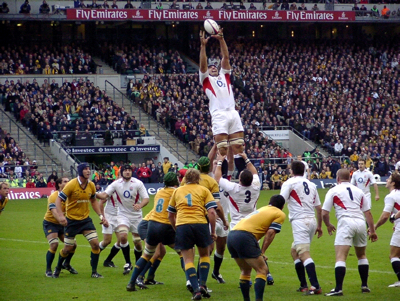
I am way overdue employing another sporting analogy - odd however how must of my rugby-related ones tend to be non-explicit

My experience is that enhanced information can have enormous payback. But it is risky to embark on an information programme without this being explicitly recognised by the senior management team. If you avoid laying this important foundation, then this is simply storing up trouble for the future. The best BI/DW projects are totally aligned with the strategic goals of the organisation. Given this, explaining their objectives and soliciting executive support should be all the easier. This is something that I would encourage my fellow information professionals to seek without exception.
 

Data visualisation

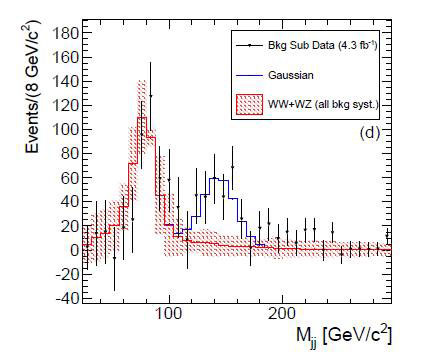
Some pictures speak for themselves:

If you don't know what this is, check out the announcement from the CDF Collaboration at: http://www.fnal.gov/pub/today/archive_2011/today11-04-07_CDFpeakresult.html - All you have to do is click here. HINT: the peak at 140 GeV/c^2 may be important.
 

The triangle paradox – solved

When I posted The triangle paradox, I said that I would post a solution in few days. As per the comments on my earlier article, some via Twitter and indeed the context of the article in which this supposed mathematical conundrum was posted, the heart of the matter is an optical illusion.

If we consider just the first part of the paradox:

More than meets the eyes

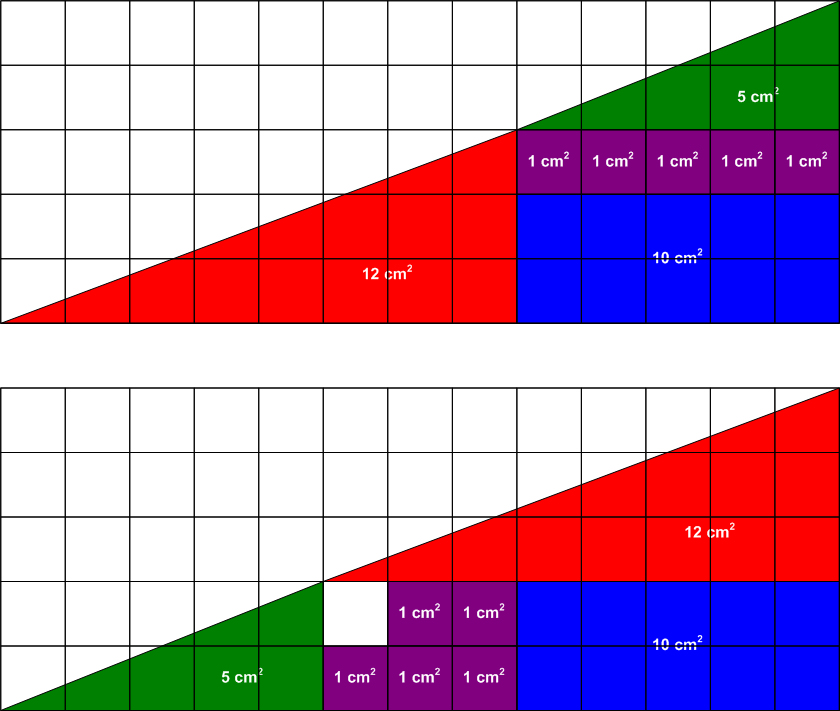
Then the key is in realising that the red and green triangles are not similar (in the geometric sense of the word). In particular the left hand angles are not the same, thus when lined-up they do not form the hypotenuse of the larger, compound triangle that our eyes see. In the example above, the line tracing the red and green triangles dips below what would be the hypotenuse of the big triangle. In the rearranged version, it bulges above. This is where the extra white square comes from.

It is probably easier to see this diagrammatically. The following figure has been distorted to make things easier to understand:

Dimensions exaggerated

Let’s start with my point about the triangles not being similar:

EAB = tan-1(2/5) ≈ 21.8°

FAC = tan-1(3/8) ≈ 20.6°

So the two triangles are not similar and, as stated above, the two arrangements don’t quite line up to form the big triangle shown in the paradox. There is a “gap” between them formed by the grey parallelogram above, whose size has been exaggerated. This difference gets lost in the thickness of the lines and also our eyes just assume that the two arrangements form the same big triangle.

To work out the area of the parallelogram:

AE = (22 + 52)½ = √29
EI = (32 + 82)½ = √73
AI = (52 + 132)½ = √194

The area of a triangle with sides a, b and c is given by:

Area of triangle

Sparing you the arithmetic, when you substritute the values for AE, EI and AI in the above equation, the area of ∆ AEI is precisely ½.

∆ AEI and ∆ AFI are clearly identical, so the area of parallelogram AEIF is twice the area of either is

2 x ½ = 1

This is where the “missing” square comes from.


As was pointed out in a comment on the original post, the above should form something of a warning to those who place wholly uncritical faith in data visualisation. Much like statistics, while this is a powerful tool in the hands of the expert, it can mislead if used without due care and attention.
 

Illuminating the darkness

Recrudescence

My partner was kind enough to buy me an Amazon Kindle for Christmas and I have enjoyed using it. Yes there were the problems with them registering me to Amazon.com, rather than Amazon.co.uk (thereby incurring foreign transaction charges). And yes they didn’t cancel a trial Economist subscription I took out on the former when I was transferred to the latter. However, these issues were sorted out and money refunded.

I suppose I had the same initial reaction as many people; that they had left a sticker covering the screen, which was intended to demonstrate what the display looked like. After failing to peal it off (thankfully not too energetically) I realised that the screen was actually that clear and that different from a “normal” computer display (I was thinking smart ‘phone or laptop). I am writing this post on one of my many laptops, the screen is OK, but the Kindle is much easier on the eye and pretty close to a high-quality printed page. Suffice it to say that I downloaded new copies of several of my favourite books to it with the prospect of re-engaging with them at my leisure.

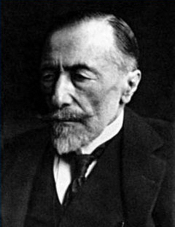
But enough of me singing the general praises of the device, I have discovered a particular benefit. While this may well be realised by other people, it is of particular pertinence to devotees of the works of Joseph Conrad.

Joseph Conrad

As one of the undisputed giants of English prose, it is rather ironic that English itself was either Conrad’s fifth, or sixth, language (chronologically: Polish; Russian – though he later, perhaps understandably given the turbulence of the times, repudiated this as a language; French; Latin; German; and – finally, when he was in his twenties, English). I have greatly appreciated his work, since first reading Heart of Darkness. I won’t attempt to offer a literary appreciation of his genius and leave this to others with greater talents in that area. However, despite coming late to the English tongue, Conrad was a master of it and had an amazing vocabulary.

An indispensable companion to Conrad's works

I generally view myself as being reasonably erudite (less charitably I have been accused of having swallowed a thesaurus), but used to have to keep a dictionary at hand when reading Conrad; either that or try to impute meaning from context (probably getting it wrong more times that I care to admit). In some ways, my own limitations slightly diluted my enjoyment of reading. It is a bit distracting to put down one book, pick up a dictionary, look up a word and then revert to the original tome (it was even more complicated as a child reading Jules Verne’s 20,000 Leagues under the Sea with both a dictionary and gazetteer to hand!).

Incidentally my fondness of Conrad led to my one contribution to the field of science. I established my result after extensive fieldwork involving Nostromo and a daily commute. Thomas’ Theorem is as follows:

While this feat is more than achievable with the works of other authors, it is impossible to read Conrad on the Tube.

However, the Kindle is a joy in this respect as you can look up words using the built in dictionary, quickly, easily and without disturbing the thread of the narrative too much. This has got me out of my rather lazy habit of assuming that I sort of know what a word means and thereby given me a few surprises. Based on the the initial illustration above, for example, I had to modify my understanding of recrudescence!

Of course this means that I may have to re-evaluate whether Thomas’ Theorem holds in all conditions. Perhaps a sub-clause excluding the use of a Kindle is required. I will report back…


This is not the first time that Conrad has appeared in the pages of this blog, I had the temerity to also reference him in Aphorism of the Week some time ago.
 

What is wrong with this picture?

Following on from the optical illusions that I featured earlier in the week, here is another picture with something subtly (or perhaps not so subtly) wrong with it. Can you spot what?

So which one is your favourite?
 

The triangle paradox

This seems to be turning into Mathematics week at peterjamesthomas.com. The “paradox” shown in the latter part of this article was presented to the author and some of his work colleagues at a recent seminar. It kept company with some well-know trompe l’œil such as:

Old or young woman?

and

Quadruped?

and

Parallel lines?

However the final item presented was rather more worrying as it seemed to be less related to the human eye’s (or perhaps more accurately the human brain’s) ability to discern shape from minimal cues and more to do with mathematical fallacy. The person presenting these images (actually they were slightly different ones, I have simplified the problem) claimed that they themselves had no idea about the solution.

Consider the following two triangles:

Spot the difference...

The upper one has been decomposed into two smaller triangles – one red, one green – a blue rectangle and a series of purple squares.

These shapes have then been rearranged to form the lower triangle. But something is going wrong here. Where has the additional white square come from?

Without even making recourse to Gödel, surely this result stabs at the heart of Mathematics. What is going on?

After a bit of thought and going down at least one blind alley, I managed to work this one out (and thereby save Mathematics single-handedly). I’ll publish the solution in a later article. Until then, any suggestions are welcome.


For those who don’t want to think about this too much, the solution has now been posted here.
 

Half full, or half empty?

Glass half, er...

Someone being described as a “glass half-full” or “glass half-empty” sort of person is something that one hears increasingly frequently. I was recently discussing this with a friend and we both agreed that the analogy was unhelpful. First it supports a drastically simplistic and binary view of people having fixed attitudes and behaviours in all circumstances. Day-to-day observation suggests on the contrary that a person my be an avid optimist one day about one thing and a manic pessimist the next day about another thing. This rather shallow type of characterisation rather reminds me of some of the subjects I touched on in The Big Picture and Pigeonholing – A tragedy some time ago.

However, there is a more fundamental consideration; wilful inaccuracy. A glass that is half empty is also half full; that’s the definition of a half. Either description is 100% valid and therefore logically can tell you nothing about the person’s mindset.

Instead what might be more apposite is to adopt a different way to divide sheep from goats. This is still rather too binary for my taste, but at least it has the merit of a greater degree of rigour. I propose dividing people according to how they view a glass that is three quarters empty:

  • I still have some left: optimist
  • There isn’t very much left: pessimist

I think that all of our lives would be much the better for adopting this simple principle.

The International Organisation for stamping out sloppiness in spoken speech

Accordingly, I am going to submit this recommendation to the International Standards Organisation for their urgent consideration. I’ll make sure that I keep readers up-to-date with how my submission progresses.