Recipes for success?

I should acknowledge that I am indebted to a conversation that I had with John Collins on his blog, Views from the Bridge, for some of the themes I discuss in this article.
 
Recipe for Success?
 
Introduction

Towards the end of a recent article on perseverance I referred to people’s desire to find recipes for success. Here’s what I said:

Sometimes we want to find a magic recipe for success, or – to mix the metaphor – a silver bullet. We want to discover a series of defined steps to take that, if repeated religiously, will guarantee that we get to the desired goal each and every time. That’s why articles entitled “The 5 ways to […]” and “My top tips for […]” are so well-read on the web.

As well as my examples of internet top tips (see any number of articles claiming to tell you how to use twitter successfully to get the idea), this phenomenon is also a major factor behind the enduring popularity of celebrity business books. As far as I can see, these fall into two categories.
 
 
1. The Ex-CEO

This is where the extremely successful and well-known Mr Brown (and sadly it is still mostly Mr, rather than Ms Brown), now retired but previously President and CEO of Big Company Inc., writes (or more likely has some one ghost-write) a memoir explaining the secrets of his success. While the book may dwell on their upbringing, education, role models, or character-forming events in their lives, much of the work will probably focus on them just being much smarter, more risk-taking, or having greater insight than the competition (most likely all of these). Of course there may well be some interesting tit-bits amongst the reams of self-aggrandisement, but it is worth questioning just how applicable these might be to your own situation.

Are the things that Mr Brown ascribes his success to really what led to his glittering career? Are there perhaps other factors that are not captured in the memoir, but which, if absent in another organisation, would render implementing Mr Brown’s explicit recommendations valueless? Did Mr Brown’s greatest achievements actually have a big slice of luck attached to them (stumbling upon a market or a product by accident, a major competitor losing their way, events beyond anyone’s control shaping matters and so on)? Would the things that Big Company Inc. did under Mr Brown’s esteemed leadership actually work in another company, in a different market or country and with a distinctive business culture?

Put it this way, if you work in Financial Services, would copying what worked in Retail be a good idea? Alternatively, if two companies are both in Retail, does it make sense for a less successful company to slavishly adopt the strategy of the market leader – wouldn’t it be more sensible if they tried to develop a different strategy in order to differentiate their brand?

Of course there is always value in learning from the mistakes and successes of others, but surely there is a limit to how useful a business memoir can be in forming a business strategy.
 
 
2. The Academic Expert

Here Professor Green (probably still male), has a long and distinguished career in academia, reading and deconstructing the memoirs of Mr Brown and his peers, identifying common themes between them, doing primary research and constructing recherché models of business strategy development and execution. If there is a new management fad out there, Professor Green is sure to know about it – in fact it may well be based on an article of his that appeared in HBR.

Well there is certainly some value in trying to tease out commonalities between successful companies, but this is probably a lot harder than it might seem. While there may be some recurring themes, maybe many of our champions of business are one offs, successful for reasons other than their business models or strategies. In fact they may well be as unique as the people who lead them. Maybe there is no equivalent of the standard model of quantum mechanics (to say nothing of a deeper grand unified theory) that underpins business success – perhaps the science of business is different from the more reductionist sciences, such as physics. Maybe there isn’t a formula for business success; perhaps it is more like Darwinian natural selection (I’ll come back to this idea later).

Whichever way you look at it, again there is probably a limit to how much insight you can glean from this type of book.
 
 
Other genres

Of course this phenomenon extends into many other areas of human activity. As a youth I can remember only too well poring over cricket manuals in an (ultimately fruitless) attempt to improve my batting or wicket-keeping. My father, at the age of 72, still does the same with golf manuals.

The endless array of cooking books also in the same category and where would we be without the panoply of self-help books such as The Seven Habits of Annoyingly Organised People? All of which goes to show that reliance on recipes for success is a deeply ingrained human trait.
 
 
Recipes for success in IT

Having established that people like turning to both “My top tips for […]” and “Mr Brown’s Glittering Career” (available at all good booksellers) how does this aspect of human nature impinge on one of my main areas of endeavour, IT?

Well it has a major impact in my opinion. In fact it is difficult to think of an area of life more obsessed with frameworks, blue-prints, road-maps, procedures, best practices and methodologies (to say nothing of ontologies and taxonomies). All of these are intended to take the risk out of activities – well at least to provide the people following them with the ability to say “well I did what the methodology told me to do”. Of course IT projects and IT development are very complex things and standards of design, coding and behaviour of systems are of paramount importance; but it still seems that IT people have a more visceral relationship with the above-stated areas than would be dictated solely by ticking the necessary boxes.

Nevertheless, having been personally responsible for instigating a thoroughgoing process of standardisation and quality control in a software house (and thereby obtaining an ISO accreditation), it would be churlish of me to argue that that there is no benefit in rigorously applying methodologies in IT.

When it comes to some aspects of project management and to change management in particular, some of the scepticism that I exhibited about celebrity business books returns. It’s not so much that a methodology or even a list of items to tick is not valuable, but that it cannot be an end in itself. The important thing is the thinking that goes into drawing up what you need to do and how you are going to do it, not the method that you use to record these and monitor progress. Sometimes these crucial ingredients get lost. Indeed there does seem to be an entire class of people who focus just on managing lists, rather than the ideas behind them, or the people actually doing the work.
 
 
The benefits of a Darwinian approach
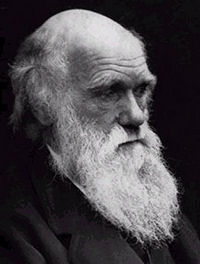
Charles Darwin

I raised the idea of a Darwinian approach to business strategy earlier in this article. There do seem to be some crossovers with how we observe businesses in operation. We are familiar with the image of companies competing with each other for limited resources (our wallets, mine being very limited at present). We understand the pressure that organisations are under to come up with better, cheaper, more functional and sexier products (that are now carbon neutral and ethically-sourced as well).

The language of business is suffused by jungle analogies. The adaptation of Tennyson’s “Nature, red in tooth and claw” to capitalism being just one of the most well-known examples. The companies that are best at this game survive and thrive, those that are not fail and are forgotten. Companies in more mature markets are even often referred to as dinosaurs or fossils. The idea of never-ending refinement and progress pushing on is an essential part of business.

However, perhaps this evolutionary approach, so evident at the macro-level can also work on a micro-scale. Maybe, rather than relying on the thoughts of Mr Brown or Professor Green, a better approach would be come up with some ideas of our own, test them, discard the bad ones and nurture the less bad ones. In time, with appropriate development and alteration, the less bad may become good and then even great (hang on, I seem to have found my way back to business books with that phrase!).

To me, such an approach is more likely to result in something novel and valuable. Following a recipe for success can only ever be as good as the recipe itself. Thinking for yourself can transcend these limitations and I would argue that the downside is no greater than attempting to ape someone else’s ideas. In both cases the worst that can happen is only extinction.
 
 
Disclaimer – sort of

Of course this article has a degree of self reference. Relying upon your own intellect (hopefully refined and improved by other people’s input) is of course another recipe for success. However I hope it is a less proscriptive one. I recommend giving it a try.


Continue reading about this area in: Synthesis.

 

A note to people who subscribe to this site via e-mail

Oops!

The latest e-mail containing content from the site (specifically My “all-time” most-read 5 articles) seems to have got rather mangled, with the text bunched up to one side.

It looks like a problem with the use of <table>, but I’m not quite sure what the precise issue is as the HTML appears to be well-formed. Hopefully this problem will not recur and, in the meantime, please accept my apologies for the glitch.

Peter


PS it is a bit odd as the article appears fine when syndicated on SmartDataCollective.com here.
 

My “all-time” most-read 5 articles

WordPress.com provides a handy widget that shows the articles (and pages) on this blog that have had the most hits over the last 24-48 hours. This appears as the second box from the top of my sidebar, just beneath the RSS subscription options. However this time-period is a little too short to assess the true popularity of articles. In order to remedy this, I have used WordPress.com’s own tracking stats to produce the following list, which covers the brief life of this site since November 2008.

There is clear water between the top five and the chasing pack. The next most popular article, The Top Business Issues facing CIOs / IT Directors – Results, is 176 hits back on 694. Of course one might assume that an “all-time” list would favour the earliest posts on this site. It is therefore interesting to note that the list instead features a number of more recent pieces and that the only really “old” piece is my first article plagiarising John Gray’s famous book.

I should also note that I have removed Keynote Articles (1,073 hits) from the list as this page aggregates all of my other posts, rather than being an article in its own right.

Of course this is merely a snap-shot of today’s figures and the list is already out of date as I write. I may look to update the figures occasionally, perhaps every three to six months.

1. Measuring the benefits of Business Intelligence 1,161
2. Business is from Mars and IT is from Venus 1,154
3. Trends in Business Intelligence 1,039
4. A review of “The History of Business Intelligence” by Nic Smith 894
5. Business Analytics vs Business Intelligence 880


My approach to Management

This is a topic that I have been asked to talk about quite a bit recently and I thought that it would be worth writing a brief article on the subject. There are many different approaches to management that can be successful and here I am not looking to present best practice, just to outline what has worked for me over the years. We are all individuals, as are the people we manage, and different things will work for different people at different times.

Helping people to climb to the top...

I first started managing people in 1992 at the tender age of 26. My preparation for this elevation was being a team leader for the previous three years. At the time I was working in a software house, having joined as a trainee analyst/programmer in 1988. As is typical in such organisations (and indeed in most other types of organisations) I had progressed thusfar by being good at design and programming, not by virtue of my amazing people skills.

As a new manager, I had little personal experience or training to fall back on. However I was lucky enough to have some one working for me who had had a long career in management. The gentleman was in his mid-50s, had previously been the IT Director of a major food company, but had decided that he had had enough of the stress of managing and gone back to programming for the last few years of his career. While having someone twice my age and many times my experience working for me might have been difficult for both of us, I guess I was at least smart enough to realise that here was someone I could learn from. In fact throughout my career I have often been lucky enough to find such people to provide advice and act as my mentor.

The person in question taught me that management was – unlike design and programming – messy and complicated and that there were no hard-and-fast rules to guarantee success. However, he did instil in me a respect for the people who work for me, a willingness to listen to them and the idea that it was my role to help them be successful and thereby help the company to be successful. The idea of achieving success through people is something that has stayed with me ever since.

Later in my career at the same company, when I was responsible for running development with 30 people working for me, I was lucky enough to have a great role-model as my manager. This person was integrity and unflappability personified. While he never shied away from addressing difficult issues, he did so in a calm and humane manner. He always gave people room to explain their views and listened to them. When it was time for him to set out his own position, he did so carefully, but clearly. More often than not, this approach brought people with him without the need to pull any of the command and control levers that he had at his disposal.

In my final two positions at the same organisation, I reported directly to the Managing Director (and owner). I had worked closely with this remarkable man throughout my time at the company, but now being his right-hand-man gave me a great opportunity to learn from how he operated. The MD was probably the most intelligent person that I ever had the pleasure to come across in a work-related environment. He was obviously very confident in his own abilities and in making assessments of complicated situations. He also would ask probing questions about areas that were of importance and had a nose for detecting any attempts to pull the wool over his eyes. The flip-side of this almost academic approach was that, if you did know your stuff and provided credible answers based in fact, then he began to trust your judgement and to allow you increasing levels of autonomy. Also, as is common with some of the smartest people, he never felt that he had a monopoly on knowledge or that he could not learn from other people’s perspectives. He was much better at admitting to mistakes, or acknowledging that some one else’s opinion had been correct than many senior managers that I have met since.

Of course there have been many other people that I have learnt from over the course of my 20 years in the IT business and I hope that I continue to learn for the rest of my career. However, the three people I have just mentioned all had a big hand in shaping my general approach to management and I doubt that the basic framework of this will alter too much in the future. Having provided this background, what does my management framework look like?

First I like to give people a good degree of autonomy, within parameters that I have set. I like to give my people assurance that one of my main roles is to be there to help when they need it. When the inevitable problems occur, I try to work with people to establish why they have happened and help people to learn from setbacks. I have found that many people respond well to being treated in this way and I think that this approach has helped me in developing managers who have gone on to greater things in their own right.

Second I have a broadly collegiate approach. This is not just to be nice, but because I believe that it is often a very effective way to work. Of course there will always be situations when decisive leadership is required and I am comfortable that this is part of my role. However in these circumstances, I think that it helps enormously if you have already built up a mutual respect between yourself and your team. Something that might sometimes be overlooked is that when you take other people’s opinions into account they can sometimes save you from making a complete fool of yourself!

Third I like to give my managers a very clear idea of what we are trying to do and why (a vision that I would also expect them to help me form), but then give them the space to achieve these objectives in their own way. Particularly coming from a technical background, as many IT managers do, it can be very tempting to think that you know best. However taking this approach can be demotivating for the people working for you, it can deprive them of a chance to learn and of course it is just possible that you don’t know best after all and that someone else will come up with a novel and superior approach.

Fourth one of my prime responsibilities is to grow talent for the organisation where I work. This means challenging your people to take on new things, delegating tasks to them even if it may be a stretch for them to carry these out in the first instance. This is the main way that people grow and the occasional false-step is a reasonable price to pay for increasing people’s experience and broadening their horizons.

Fifth is maybe the less pleasant side of management and to do with dealing with under performance. When some one working for me struggles, my first duty is to help them to be more successful. This can often require a long-term commitment to coaching and some difficult conversations about where improvement is required. In these situations I have two guiding principles: a) be as open and direct as you can be as it is much fairer on everyone and b) act sooner rather than later, the longer a problem persists the more difficult it will be to address. Taking this approach has often led to problems either being overcome, or to a mutual recognition that things are not going to work out. This latter outcome, while not exactly great, is vastly superior for all concerned to a more dictatorial approach (and also has less of a negative impact on the rest of the team).

At the beginning of this piece I mentioned that I had learnt respect for people from my first management mentor. I think that this principle underpins my entire approach. I suppose a simple summary is that I try to manage people the way that I would like to be managed myself. Of course sometimes I fall short of this ideal, but it is not a bad thing to aim for and I believe that this approach has been a significant contributor to the successes that I have enjoyed in different roles and different organisations.
 

The Dictatorship of the Analysts

Lest it be thought that I am wholly obsessed by the Business Intelligence vs Business Analytics issue (and to be honest I have a whole lot of other ideas for articles that I would rather be working on), I should point out that this piece is not focussed on SAS. In my last correspondence with that organisation (which was in public and may be viewed here) I agreed with Gaurav Verma’s suggestion that SAS customers be left to make up their own minds about the issue.

CIO Magazine

However the ripples continue to spread from the rock that Jim Davis threw into the Business Intelligence pond. The latest mini-tsunami is in an article on CIO.com by Scott Staples, President and Co-CEO of IT Services at MindTree. [Incidentally, I’d love to tell you more about MindTree’s expertise in the area of Business Intelligence, but unfortunately I can’t get their web-site’s menu to work in either Chrome or IE8; I hope that you have better luck.]

Scott’s full article is entitled Analytics: Unlocking Value in Business Intelligence (BI) Initiatives. In this, amongst other claims, Scott states the following:

To turn data into information, companies need a three-step process:

  1. Data Warehouse (DW)—companies need a place for data to reside and rules on how the data should be structured.
  2. Business Intelligence—companies need a way to slice and dice the data and generate reports.
  3. Analytics—companies need to extract the data, analyze trends, uncover opportunities, find new customer segments, and so forth.

Most companies fail to add the third step to their DW and BI initiatives and hence fall short on converting data into information.

He goes on to say:

[…] instead of companies just talking about their DW and BI strategies, they must now accept analytics as a core component of business intelligence. This change in mindset will solve the dilemma of data ≠ information:

Current Mindset: DW + BI = Data

Future Mindset: DW + (BI + Analytics) = Information

Now in many ways I agree with a lot of what Scott says, it is indeed mostly common sense. My quibble comes with his definitions of BI and Analytics above. To summarise, he essentially says “BI is about slicing and dicing data and generating reports” and “Analytics is about extracting data, analysing trends, uncovering opportunities and finding new customer segments”. To me Scott has really just described two aspects of exactly the same thing, namely Business Intelligence. What is slicing and dicing for if not to achieve the aims ascribed above to Analytics?

Let me again – and for the sake of this argument only – accept the assertion that Analytics is wholly separate from BI (rather than a subset). As I have stated before this is not entirely in accordance with my own views, but I am not religious about this issue of definition and can happily live with other people’s take on it. I suppose that one way of thinking about this separation is to call the bits of BI that are not Analytics by the older name of OLAP (possibly ignoring what the ‘A’ stands for, but I digress). However, even proponents of the essential separateness of BI and Analytics tend to adopt different definitions to Scott.

To me what differentiates Analytics from other parts of BI is statistics. Applying advanced (or indeed relatively simple) statistical methods to structured, reliable data (such as one would hope to find in data warehouses more often than not) would clearly be the province of Analytics. Thus seeking to find attributes of customers (e.g. how reliably they pay their bills, or what areas they live in) or events in their relationships with an organisation (e.g. whether a customer service problem arose and how it was dealt with) that are correlated with retention/repeat business would be Analytics.

Maybe discerning deeply hidden trends in data would also fall into this camp, but what about the rather simpler “analysing trends” that Scott ascribes to Analytics? Well isn’t that just another type of slice and dice that he firmly puts in the BI camp?

Trend analysis in a multidimensional environment is simply using time as one of the dimensions that you are slicing and dicing your measures by. If you want to extrapolate from data, albeit in a visual (and possibly non-rigorous manner) to estimate future figures, then often a simple graph will suffice (something that virtually all BI tools will provide). If you want to remove the impact of outlying values in order to establish a simple correlation, then most BI tools will let you filter, or apply bands (for example excluding large events that would otherwise skew results and mask underlying trends).

Of course it is maybe a little more difficult to do something like eliminating seasonality from figures in these tools, but then this is pretty straightforward to do in Excel if it is an occasional need (and most BI tools support one-click downloading to Excel). If such adjustments are a more regular requirement, then seasonally adjusted measures can be created in the Data Mart with little difficulty. Then pretty standard BI facilities can be used to do some basic analysis.

Of course paid-up statisticians may be crying foul at such loose analysis, of course correlation does not imply causation, but here we are talking about generally rather simple measures such as sales, not the life expectancy of a population, or the GDP of a country. We are also talking about trends that most business people will already have a good feeling for, not phenomena requiring the application of stochastic time series to model them.

So, unlike Scott, I would place “back-of-an-envelop” and graphical-based analysis of figures very firmly in the BI camp. To me proper Analytics is more about applying rigorous statistical methods to data in order to either generate hypotheses, or validate them. It tends to be the province of specialists, whereas BI (under the definition that I am currently using where it is synonymous with OLAP) is carried out profitably by a wider range of business managers.

So is an absence of Analytics – now using my statistically-based definition – a major problem in “converting data into information” as Scott claims? I would answer with a very firm “no”. If we take information as being that which is generated and consumed by a wide range of managers in an organisation, then if this is wrong then the problem is much earlier on and most likely centred on how the data warehousing and BI parts have been implemented (or indeed in a failure to manage the concomitant behavioural change). I covered what I believe are often the reasons that BI projects fail to live up to their promise in my response to a Gartner report. This earlier article may be viewed here.

In fact I think that what happens is that when broader BI projects fail in an organisation, people fall back on two things: a) their own data (Excel and Access) and b) the information developed by the same statistical experts who are the logical users of Analytic tools. The latter is characterised by a reliance on Finance, or Marketing reports produced by highly numerate people with Accounting qualifications or MBAs, but which are often unconnected to business manager’s day-to-day experiences. The phrase “democratisation of information” has been used in relation to BI. Where BI fails, or does not exist, then the situation I have just described is maybe instead the dictatorship of the analysts.

I have chosen the word “dictatorship” with all of its negative connotations advisedly. I do not think that the situations that I have described above is a great position for a company to be in. The solution is not more Analytics, which simply entrenches the position of the experts to the detriment of the wider business community, but getting the more mass-market disciplines of the BI (again as defined above) and data warehousing pieces right and then focussing on managing the related organisational change. In the world of business information, as in the broader context, more democracy is indeed the antidote to dictatorship.

I have penned some of my ideas about how to give your BI projects the greatest chance of success in many places on this blog. But for those interested, I suggest maybe starting with: Scaling-up Performance Management, “All that glisters is not gold” – some thoughts on dashboards, The confluence of BI and change management and indeed the other blog articles (both here and elsewhere) that these three pieces link to.

Also for those with less time available, and although the article is obviously focussed on a specific issue, the first few sections of Is outsourcing business intelligence a good idea? pull together many of these themes and may be a useful place to start.

If your organisation is serious about adding value via the better use of information, my recommendation is to think hard about these areas rather than leaping into Analytics just because it is the latest IT plat du jour.
 

The Apologists

A whole mini industry has recently been created in SAS based on justifying Jim Davis’ comments to the effect that: Business Intelligence is dead, long live Business Analytics. An example is a blog post by Alison Bolen, sascom Editor-in-Chief, entitled: More notes on naming. While such dedication to creating jobs in the current economic climate is to be lauded, I’m still not sure what SAS is trying to achieve.

The most recent article is by Gaurav Verma, Global Marketing Manager for Business Analytics at SAS. He calls his piece: Business Analytics vs. Business Intelligence – it’s more than just semantics or marketing hyperbole. In this Gaurav asks the question:

Given that I have been evangelizing BI for more than 12 years as practitioner, analyst, consultant and marketer, I should be leading the calls of blasphemy. Instead, I’m out front leading global marketing for the SAS Business Analytics framework. Why?

One answer that immediately comes to mind is contained in the question, it is of course: “because Gaurav is the head of global marketing for Business Analytics at SAS”.

Later in his argument, by sleight of hand, Gaurav associates business intelligence with:

Traditional and rapidly commoditizing query and reporting

Of course everything that is not “query and reporting” must be called something else, presumably business analytics is an apt phrase in Gaurav’s mind. To me, despite Gaurav’s headline, this is just yet more wordsmithery. No other commentators seem to see BI as primarily “query and reporting” and if you remove this plank from Gaurav’s aregument, the rest of it falls to pieces.

The choice of words is interesting. Recent pieces by SASers have applied adjectives such as “traditional”, “classic” and even “little” to the noun-phrase “business intelligence” in order to explain exactly what Jim Davis actually meant by his remarks. Whether any of these linguistic qualifications of the area of BI are required, separate from the task of supporting Mr Davis’ arguments, remains something of a mystery to me.

I for one would heartily like to move beyond these silly tit-for-tat discussions. My recommendations for the course that SAS should take appear here – albeit in lightly coded form.

Short of retracting Mr Davis’ ill-thought-out comments, the second best idea for SAS might be to be very quiet about the area for a while and hope that people slowly forget about it. For some reason, it is SAS themselves who seem to want to keep this sorry episode alive. They do this by continuing to publish artciles such as Gaurav’s. While this trend continues, I’ll continue to publish my rebuttals, boring as it may become for everyone else.
 

A business intelligence parable

Once upon a time there were two technology companies, both operating in the Corporate On-Line Analysis market. One was called Credible Organisational KPI Enterprise (IT people love acronyms so much that they sometimes even nest them) and the other was known as Predictive Enlightenment Powered by Statistical Inference. However, both companies were generally better known by their respective acronyms; as was the market in which they competed.

Credible Organisational KPI Enterprise and Predictive Enlightenment Powered by Statistical Inference had parts of their respective product sets that overlapped with each other, but also had some more distinctive offerings. In the places where their portfolios diverged, each was seen as a market leader. In the shared areas, things were less clear-cut; some users preferring Credible Organisational KPI Enterprise and others Predictive Enlightenment Powered by Statistical Inference. Often those who expressed a preference did so in very strong terms, but not always with much evidence to back this up.

Well none of this mattered too much to most regular people until one day the head of marketing of Predictive Enlightenment Powered by Statistical Inference made a speech in which he claimed – contrary to all previous industry thinking – that the usefulness of general Corporate On-Line Analysis had been overstated and that only Predictive Enlightenment Powered by Statistical Inference could really offer users any benefits.

The deep insight underpinning the claims of Predictive Enlightenment Powered by Statistical Inference’s Chief Marketing Officer was that while Credible Organisational KPI Enterprise’s products relied on mostly water and sugar to make their customers happy, the revolutionary tools provided by his company had a secret, special ingredient, code-named only hydrated-C12H22O11.

These claims caused rather a furore in the Corporate On-Line Analysis world, with many commentators strongly disputing them. Several of the colleagues of the Predictive Enlightenment Powered by Statistical Inference CMO rushed to his defence. Some indeed went on to claim that Corporate On-Line Analysis was merely a subset of Predictive Enlightenment Powered by Statistical Inference, this despite most people having previously thought of both Credible Organisational KPI Enterprise and Predictive Enlightenment Powered by Statistical Inference as being different types of Corporate On-Line Analysis vendors.

While this move by Predictive Enlightenment Powered by Statistical Inference was probably intended to highlight the strengths of their product set and to better differentiate themselves from Credible Organisational KPI Enterprise, instead it just confused most people working in the area of Corporate On-Line Analysis and made them wonder whether the people at Predictive Enlightenment Powered by Statistical Inference understood their own products and market.

In the end, the people at Predictive Enlightenment Powered by Statistical Inference came to their senses, realising that what had initially seemed like a great marketing idea was actually counterproductive and even making them look slightly ridiculous. They issued a statement saying that their CMO’s comments had been taken out of context but nevertheless unequivocally retracting them.

After this outbreak of sensible behaviour, things in the Corporate On-Line Analysis world started to settle down again and everyone lived happily ever after.

BI versus SAS?


Before the legal teams of any beverage companies start issuing writs, I should point out that any similarity between the above fable and their products is wholly coincidental. Any similarity to the recent behaviour of other commercial organisations may be somewhat less of a coincidence.
 

Pigeonholing – A tragedy

Introduction

Pigeon/Hole

Way back when I wrote Vision vs Pragmatism I mentioned that:

There is nothing that homo sapiens likes more than to pigeonhole his or her fellows. We tend to take a binary approach to people’s skills. Fred is a visionary, but you wouldn’t want him to run a project. Jane is brilliant at the details, but she doesn’t see the big picture. Perhaps we are more comfortable with the idea that the strength of any colleague is automatically balanced by a weakness; it brings them back down to a reasonable level.

This topic came up again in a follow-on discussion I had with a CIO who had attended the Chase Zander IT Director Forum last week. During this chat, we spoke about the benefit of having a broad set of skills, but recognised that it was not always easy to find roles that allowed a significant number of these to be used.

My thoughts went back to a conversation I had had with a prospective employer a few weeks earlier. In pondering this, as sometimes happens with me, it became somewhat expanded, embellished and took on the form of a scene in a play.
 
 
Act II. Scene 1. An office in a major capital.

Prospective employer: So you are a business intelligence person?
The hero: That’s right.
Prospective employer: But you are also involved in change management?
The hero: Yes, I have worked a lot on cultural transformation.
Prospective employer: And it says here that you have also developed and implemented financial and other systems.
The hero: Yes I have done all of that as well.
Prospective employer: And that you were one of the people who ran a start-up organisation.
The hero: Yes I did that, it was a really interesting part of my career.
Prospective employer: Also you have both run multiple IT departments, managing a significant number of staff, and have acted as a one-man-band in internal consulting positions?
The hero: Those are both true assertions, yes.
Prospective employer: And here there is some experience working in Operations, oh and Finance as well. You seem to have got around.
The hero: Well, I have done a lot of different things over the years and managed to be successful in many of them.
Prospective employer: Your CV also mentions strategy development, monitoring budgets, being a trainer and mentoring developing managers..
The hero: Those are all things that I have done it’s true.
Prospective employer: Well this is all very interesting, but I’m not really sure whether you are a business person, an IT expert, or just a Jack-of-all-trades and master of none.
The hero: Well I suppose I have worked more in an IT context than most other things, but those the achievements that I have been most proud of have crossed multiple areas.
Prospective employer: IT eh? OK I understand that, if you could rewrite your CV along those lines then I’ll have a think about what opportunities we may have in that department..
The hero: Um… OK… I’ll do that. Thank you for your time.
Exit Prospective employer, stage left.
The hero takes centre stage for his big soliloquy.
The hero: IT, or not IT? That is the question…

 
I had always thought that being pigeonholed was a negative thing to happen to someone. I now know better, it is apparently the key to getting a new job!


Readers are cordially invited to check the date of this blog posting.
 

Perseverance

This blog is generally focused on topics in business, technology and change; often all three at the same time. However, from time to time, a personal post leaks in. This is one such post… or is it? Read to the end and then I will leave you to make up your own mind about this question.
 
 
Introduction

Over the years I have played many sports. For example, both cricket and rugby union consumed much of my youth. I have also recently got into mountain biking and really enjoy it. However, the activity that I am most engaged in currently is rock climbing, something that I alluded to at the beginning of a blog post yesterday. Rock climbing forms a very broad church and I have taken part in many aspects of it. However, for a number of reasons, I have gravitated to the sub-genre of bouldering over the last few years.

For the uninitiated, bouldering is climbing un-roped, often on actual boulders, but also on small outcrops and generally going no more than 5-6m (15-20 ft) off the ground. You carry around crash-pads (bouldering mats) with you to hopefully take the brunt of any falls. Indeed the idea with bouldering is to fall… to try again… and to fall again. In fact maybe Beckett had bouldering in mind when he wrote:

Ever tried. Ever failed. No matter. Try again. Fail again. Fail better.

The whole point is that, because bouldering is relatively (and I stress the word relatively) safe, you can try to make moves that are at the limit of your ability; moves that would not be terribly sensible to even contemplate making on a longer, higher, roped climb. In fact bouldering climbs are so difficult that they are generally described as “problems”; an apt name that also conveys the fact that sometimes you have to use extreme subtlety and finesse as well as brute strength to get up them.

People often literally spend years attempting to complete a problem, particularly if it represents a new level of climbing for them, or if no one else has climbed the line before. Because of this, such unclimbed lines are often called projects. It’s common to ask a fellow climber about how their current project is progressing. This choice of name perhaps begins to give some indication of why I am sharing my experiences in bouldering with you today.

Having said that most boulder problems are short, some hardy souls also embrace high-ball bouldering which, as the name suggests, takes you a lot further off the ground. The following video shows one of the world’s best climbers, Chris Sharma, bouldering in Bishop, California. It segues to him and another top climber, Ethan Pringle, attempting a high-ball problem that weighs in at around 11-12m (35-40 ft).

Note 1: Ethan issues an expletive under his breath towards the end of the clip. I might well have been tempted to do so myself in similar circumstances, but count yourselves warned.

Note 2: As will be apparent if you try to click on this video, it is sadly no longer available, probably to do with copyright issues. Instead I would recommend that you take a look at the bouldering section of Dead Point Magazine’s site.

Copyright notice. This piece is taken from the DVD King Lines which features Chris Sharma climbing all over the world. The copyright holder is BigUp Productions, a world-renowned and award-winning producer of climbing DVDs.
 
 
So what does this have to do with the price of fish?

Please substitute “the price of eggs” if you are in the US

Green Wall Essential (V2). The Buttermilks, Bishop, CA

I have recently taken to showing the above photograph at the mid-point of my public speaking about business intelligence and change management. Generally I have introduced it with the comment that I wanted to relieve the audience’s boredom by showing them some of my holiday snaps.

As in the above video, this climb is also in Bishop, California, a world-class bouldering venue. The problem is called Green Wall Essential and its grade of difficulty is V2. Without going into enormous detail about the different grading systems for boulder problems, I’ll simply say that V2 is towards the easier end of the spectrum; V15/16 is the hardest that people have climbed.

The reason that I share this image with business/technology audiences is related to the number of times that I tried (and failed) to climb it. Here are some statistics:

  • More than 80 attempts
  • On 4 different days
  • During 2 separate visits to Bishop
  • Spread over 8 months

I mentioned the term project above; Green Wall Essential became my project and my obsession. The above statistics represent more effort than I have ever put into climbing anything else. The quartz monzonite rock is hard and crystalline. It digs into your fingers and peels off your skin leaving the rock stained with your blood (you can see the tape holding the tips of my fingers together in the photograph). Your muscles and tendons ache from trying to push yourself just that little bit harder in order to attain success. You endlessly try different foot holds and body positions. You try to be slow and precise. When that doesn’t work you try to be aggressive and dynamic. When that doesn’t work… and so on and so on.

Now in order to put in that much effort over that much time, and to put up with that much pain and that much failure, you have to really want to do the problem. You have to be persistent, despite set backs. You have to continue to keep a positive mind-set, to believe that you can be successful, even when you have just failed for the 80th time.

In my experience, that is precisely the same mind-set that you need to be successful with major projects, particularly in the business of change management. Hopefully your fingers will bleed less, but it will not be easy. There will be set-backs. Progress may sometimes seem glacially slow, but if you persevere then the goal is worth it.

Sometimes we want to find a magic recipe for success, or – to mix the metaphor – a silver bullet. We want to discover a series of defined steps to take that, if repeated religiously, will guarantee that we get to the desired goal each and every time. That’s why articles entitled “The 5 ways to […]” and “My top tips for […]” are so well-read on the web. My take is that the secret ingredient may be very simple: plain, pig-headed perseverance.

By way of illustrating the benefits of this approach (and closing this article), here I am having achieved my own personal goal on Green Wall Essential… EVENTUALLY!!!

Me a very happy boulderer having completed my project.

I wish you luck with your own projects, be these in business intelligence, other areas of IT, change management, or even bouldering. My own “Top tip” – if at first you don’t succeed, persevere.


If I have whetted anyone’s appetite about bouldering, you can take a look at my partner’s bouldering blog, which contains bouldering photos and videos, together with her musings on what motivates her to climb.
 

A review of “The History of Business Intelligence” by Nic Smith

Introduction

I had been aware of a short film about the history of Business Intelligence flitting its way around the Twitterverse, but had not made the time to take a look myself. That changed when the author, Nic Smith from Microsoft BI Solutions Marketing, contacted me asking my opinion about it.


Back in the day I was a regular Internet Movie Database reviewer, coming out of “retirement” recently to post some thoughts about Indiana Jones and the Kingdom of the Crystal Skull (see also A more appropriate metaphor for business intelligence projects). More recently, I have reviewed rock climbing DVDs, filmed rock-climbing shorts with my partner and have even written a piece aiming to apply Hollywood techniques to Marketing Change. Given this background, I thought that I would treat Nic’s work as art and review it accordingly. This article is the result.
 
 
The review

Nic’s film is epic in scope, his aim is to cover the entire sweep of not just business intelligence, but data and business systems as well. It is amazing that he manages to fit this War and Peace-like task into only 10 minutes 36 seconds. However lest the reader expects Bergman-esque earnestness, it is worth pointing out that the mood is enlivened by the type of pop-culture references that are likely to appeal to a 40-something geek like your reviewer.

I’ll try to avoid giving too much of the plot away, however Nic’s initial aim is to answer the following four questions about BI:

  1. Where have we been?
  2. Where are we now?
  3. Where are we going? and
  4. Why should you care?


  It is recommended that anyone wishing to avoid spoilers clicks here now!  


Having failed to get a satisfactory definition of BI from Wikipedia (I trod the same path looking for a definition of IT-Business Alignment in the presentation appearing here), the director embarks on a personal quest to find the answer himself. Along the way, he comes to the realisation that BI is about decisions and that people take these decisions. In trying to explore this area further, Nic takes a journey from the advent of databases in the late 1960s; through the creation of the business systems to populate them, and the silo-based reports they generated, in the 1970s; to the arrival of the data warehouse in the 1980s – a stage he tags BI 1.0.

As the profile and importance of BI increased during the 1990s and the amount of data, both structured and unstructured, increased exponentially – notably with the growth of the web – the number and type of BI tools also proliferated. Because of the variety of tools, their complexity and cost, the market then consolidated, with many of the BI tools finding new homes in the same organisations that had previously brought you business systems. The resulting menu of broad-based and functional BI platforms is Nic’s definition of BI 2.0.

Nevertheless, the director felt that there was still something not quite right in the world of BI; namely the single version of the truth was about as likely to be pinned down as a Snark. The problem in his mind was that people were still left out of the equation (Nic likes equations and includes lots of them in his film). This realisation in turn leads to the denouement in which Nic brings together all of the threads of his previous detective work to state that “BI is about providing the right data at the right time to the right people so that they can take the right decisions” (a definition I wholeheartedly endorse).

The film ends with a cliffhanger, presaging a new approach to BI that will enable collaboration and drive innovation. I suspect the resolution to this punctuated narrative will soon be playing at all good Microsoft multiplexes along with the other summer blockbusters.


Nic Smith joined the Microsoft team in December of 2006, bringing a deep knowledge base of the Business Intelligence space. Prior to joining Microsoft, Nic spent time with Business Objects, a pure play BI company, where he was responsible for the vision of BI and performance management. Nic also spent time with former BI company Crystal Decisions, where he helped bring an enterprise reporting BI platform to market. Nic brings a unique blend of market knowledge, brand development and a solution orientated focus as an evangelist for BI. In addition to his business initiatives, Nic is involved in elite athletic development for youth. He holds a Bachelors Degree in Marketing and Communications from Simon Fraser University in Vancouver, British Columbia.