The tag-line of this blog brings together business intelligence and cultural transformation. While one driver for this is that I have led BI projects that had explicit goals of cultural transformation, I think that there is a deeper connection to be explored here.
The information it provides answers pertinent business questions, and
The answers to these questions lead to people taking action.
This means that any successful BI implementation has to consider such messy and difficult things as changing how people behave. This is where the link with change management arises.
Now of course you can argue that change management is an indispensible discipline for any business project (my strong opinion is that any IT project is a type of business project) and this is clearly true. However the parameters within which a new transaction processing system has to operate are different. Here if a person does not use the system, then work does not get done. Either it is impossible to carry out your job without the system (maybe only the system generates the necessary documentation), or not using the system to record transactions is a breech in compliance (keeping paper copies in your drawer).
BI systems are not like this. People chose to use them because they judge that they either make their business life easier, or they help to improve their decision-making (hopefully both). If someone doesn’t want to use a BI system, then they won’t and can probably get on with other parts of their job. The reason that change management is even more important in BI projects is that the element of compliance (or even coercion) is absent. If you want people to use the system and behave differently as a result, then you need to think about how best to influence them in these directions.
I have written elsewhere about the importance of marketing, education and follow-up in these areas. It also is important to explicitly recognise that a BI practitioner needs to be fully engaged in change management if they are to be successful.
A final thought also worth considering is that, as the BI industry matures and focus turns more to making it work in a business context than the latest flashy dashboard technology, it is likely that one of the things that will differentiate the best users of BI is how well they manage the necessary and desirable change that it drives.
Browsing through my WordPress Tag Surfer today (a really nice feature by the way), I came across an interesting list of problems that can occur in a data warehousing / business intelligence project, together with suggestions for managing these. A link appears below:
The author, Raphael Klebanov, has clearly lived the data warehousing process and a lot of what he says chimes closely with my own experience.
Some of his themes around business engagement, the alignment of BI delivery with business needs and the importance of education are echoed throughout my own writing. This article is definitely worth a read in my opinion.
I am not sure whether it is the economic crisis focusing minds, or if there has been a turning point in the maturity of BI, but there seem to have been quite a few common-sense articles about the area recently. One I have just read is by Fei Luo at Information Management. The article may be read here.
Much of what Fei has to say chimes with my own experience of successfully driving change using BI in organisations. In particular, the observations about business involvement, having a strategy, regular business communication and the importance of training are all well-made. I would go even further saying that good BI projects must have a proper business / IT partnership at their centre; one that goes beyond business involvement and becomes business commitment.
My further thoughts about some of the themes raised by Fei Luo’s article can be viewed in the following blog posts:
I was pleased to see these areas being drawn together in a single, cogent article.
Fei Luo is vice president of information services at City National Bank, a public bank headquartered in California. Fei Luo can be reached at Fei.Luo@cnb.com.
In order to understand the flow of information, CIOs need to be intimately familiar with the direction of the business. This way, they can automate pieces of that business where it will do the most good. That can’t be done without a good understanding of how information moves through an organization, and the movement of information can’t be fully understood without understanding the business units.
It will come as no surprise to anyone who has read my earlier article about spurious distinctions between business and IT (Business is from Mars and IT is from Venus) that I strongly endorse this sentiment. Maybe the fact that mainstream commentators are talking about IT in business terms is indicative of IT beginning to come of age.
Ed Sperling is editor in chief of System-Level Design; and a contributing writer at Forbes.com.
I am again indebted to a question raised on the LinkedIn.comBusiness Intelligence Professionals group for this article. The specific thread may be viewed here and the question was the beguilingly simple “How to understand BI requirements in an organisation?”
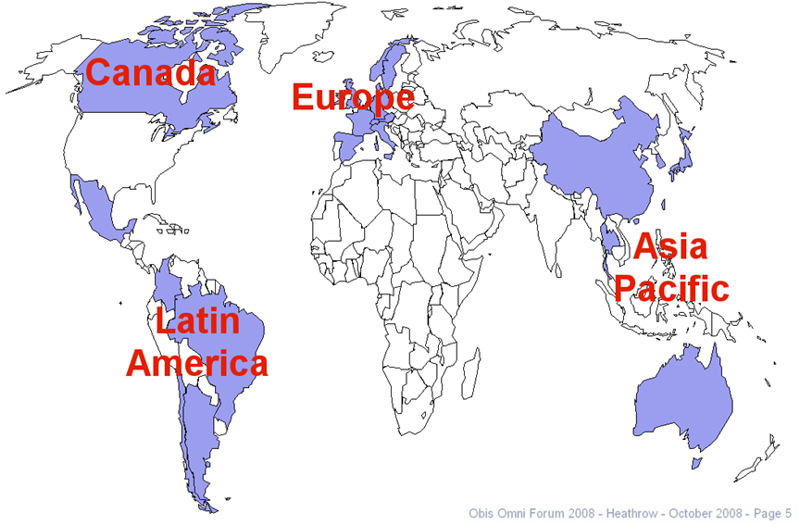
[A note here, in common with many US-based companies, “international” means all non-US markets; in my case: Asia Pacific, Europe, Canada and Latin America. By way of contrast “global” means international plus the US domestic market, i.e. all operations.]
By way of providing some context, in previous years I had successfully built and deployed an Information Architecture for the European operations of a multinational Insurance organisation and extended components of this to our Latin American subsidiaries. I had also deployed the same corporation’s financial system to its Asia Pacific business. My track-record in adding value through BI and my exposure to two major projects in the international arena led to me being asked to build on the European technology assets to develop a management information strategy for the four international regions. This article is about how I succeeded in doing this.
Consistent with the general approach that I laid out in an earlier article, my two first objectives were to understand the needs of the various business groups across the four international regions and to form a high-level picture of the IT architecture in these areas. Although I pursued these twin goals in tandem, it was the business piece that I placed most emphasis on initially. It is this area that I will have most to say about here.
Understanding the business
The way that I approached my goal of learning about the international business was not novel in any aspect except possibly its scale. As you would expect, I did it by speaking to business managers from different countries and business units in each of Asia Pacific, Canada, Europe (I revisited the European requirements to make sure I was not neglecting these), Latin America and people with international or global responsibilities.
The countries whose MI requirements I had to establish
Some of these interviews were face-to-face, but – given the geographic spread of my correspondents – the bulk of them were over the ‘phone. The many time-zones involved provided another challenge. I am based in the UK and it was not atypical to be on the ‘phone talking to Australia or Singapore at 6am my time; pick up on some European meetings during the morning; talk to Canada, Latin America and the US parent during the afternoon and evening; and be back on the ‘phone to Australia at midnight. There were a lot of these 14-hour plus days!
One thing that I was surprised by in the process was how well it worked being on the ‘phone. Although I sometimes find it a lot easier to be speaking in person, being able to pick up on visual cues and so one, using the telephone both allowed me to listen vary carefully to what was being said and to take detailed notes; it is tough taking detailed notes while maintaining eye-contact of course. I structured the interviews to explore the following areas:
An overview of the manager’s markets, products, structure, strategy, growth areas and any pressing business challenges
Their thoughts on the general IT infrastructure available to them; looking beyond what some people might view as the world of management information
The extent and quality of their current MI, including local and corporate reporting systems and even any Access databases and spread-sheets; here I placed particular emphasis on any major gaps
What their vision was for improved MI facilities; an ideal state for MI if you will
This proved to be a successful approach and I learnt a remarkable amount about the differences between countries and markets. I normally allowed 30 minutes for these calls, suggesting in my introductory e-mail that if people were pressed for time, 15 might suffice. No call was ever less than half-an-hour long, most of them expanded to be an hour or more, such was the interest generated by my line of questioning.
The scale of the work
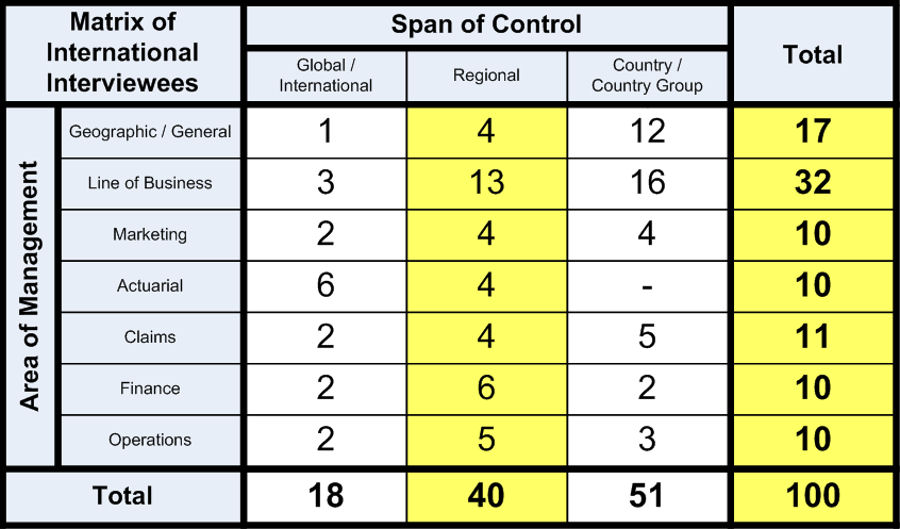
I had initially targeted speaking to around 40-50 managers, but quickly came to realise that – given the diversity of the organisation’s operations – I would need to talk to more people to get an accurate picture. As things worked out, I ended up interviewing precisely 100 managers. I started to try to describe the range of people that I talked to and quickly came to the conclusion that a picture paints a thousand words. The following exhibit provides a breakdown by geographic span of responsibility and area of the business:
The distribution of managers that I interviewed
The paper covering their detailed feedback from this exercise expanded to over 400 pages; each line of which was reviewed, sometimes amended, and signed-off by the people interviewed. Such a sign-off process certainly increases the duration of the work, but it is indispensable in my opinion. If you are inaccurate or incomplete in your understanding of the business, then you are building on foundations of sand. Of course, as well as using this exhaustive process to document business requirements, it was also a great opportunity to begin to establish relationships and also to gently start the process of marketing some of my ideas about MI.
It is clearly inappropriate for me to share my detailed findings about the business issues that the organisation was dealing with, however I will make one observation, which I think is probably replicated in many companies. When I spoke to managers at different levels within the organisation, they all cited similar strategies, challenges and priorities. This fact was testament to good communication between different tiers, however widely separated by geography, and also to a shared sense of purpose. What was however notable was that people at different levels gave varying emphasis to the issues. If a global leader prioritised areas as 1-2-3-4, it was not unusual that a manager at the country level instead ranked the same areas as 1-4-3-2. Perhaps this is not so surprising.
Understanding the systems
In parallel I also worked with the CIOs of each region and with members of their departments to understand the systems that different business units used and how they were interrelated. In doing this, it was helpful to already have the business perspective on these systems and I was able to provide general feedback about IT in each territory which was valuable to my colleagues. In this type of work (as indeed can be the case when thinking about different markets and products from the business perspective) it is sometimes easy to be overwhelmed by the differences. Instead, I made myself focus on teasing out the similarities. There ended up being many more of these that I had anticipated. In this work I relied to a great extent on my experience of consolidating data from three different underwriting systems (plus many other back-end systems) as part of my previous work in Europe.
Forming and validating a strategy
With this substantial background in both the business needs and the IT landscape, I was able to develop a management information strategy that focused on what was held in common across business units and departments, whilst still recognising the need to meet certain market-specific requirements. The lengthy hours of research that I had put in proved to be worthwhile when I presented my ideas back to many of the same group that I had interviewed and received their backing and approval.
Some final thoughts
While it was undeniably interesting and even fun to learn so much about the diverse operations of a large international organisation, the process was undeniably lengthy sometimes even arduous. It took six months from conception of the project to delivering detailed findings, recommendations and plans to the international senior management team (of course I also presented interim findings and draft recommendations several times over this period).
It remains my firm belief that this type of exercise is mandatory if you are really serious about adding value with BI. I can see no way to short-cut the process without substantially compromising on your deliverables and the value that they are intended to unlock. If you do not understand the business and its needs, it is nigh on impossible to deliver the information that they require to take decisions. In some areas of life, you just have to put in the hard work. Establishing the requirements for BI in a large international organisation is certainly one of these areas.
The current economic climate seems to be providing ammunition for both those who favour outsourcing elements of IT and those who abjure it. I’m not going to jump into the middle of these discussions today (though I am working on an article about the pros and cons of outsourcing BI which will appear here at some future point). Instead I want to talk about another type of outsourcing, one that ended up being a major success in a BI project that I recently led. The area I want to focus on is outsourcing analysis to the business.
The project was at an Insurance company and in these types of organisations one hub for business analysis is the actuarial department. These are the highly qualified and numerate people who often spend a lot of their time in simple number crunching with the aim of ensuring that underwriters have the data they need to review books of business and to take decisions about particular accounts. As with many such people, they have both the ability and desire to operate at a more strategic level. They are sometimes prevented from doing do by the burden of work.
As I have explained elsewhere, an explicit aim of this project was cultural transformation. We wanted to place reliance on credible, easy-to-use, pertinent information at the heart of all business decisions; to make it part of the corporate DNA. One approach to achieving this was making training programmes very business focussed. One exercise that the trainers (both actuarial and indeed me) took delegates through was estimating the future profitability of a book of business based on performance in previous years (using loss triangulation if you are interested). This is a standard piece of actuarial work, but the new BI system was so intuitive that underwriters could do this for themselves. Indeed they embraced doing so, realising that they could get a better and more frequently updated insight into their books of business in this way.
This meant two things. First the number-crunching workload of actuarial was reduced. Second when underwriters and actuarial engaged in discussions, for example around insurance estimates to be included in year-end results, the process was more of an informed dialogue than the previous, sometimes adversarial, approach. Actuarial time is freed-up to focus on more complex analysis, underwriters become more empowered to manage their own portfolios and the whole organisation moves up the value chain.
This is what I mean by the idea of outsourcing analysis to the business. In some ways it is the same phenomenon as companies outsourcing internal administrative tasks to customers via web applications. However, it is more powerful than this. Instead of simply transferring costs, knowledge and expertise is spread more widely and the whole organisation begins to talk about the business in a different and more consistent manner.
It’s nice to be able to report a success story for at least one type of outsourcing.
Cindi Howson is the founder of BIScorecard, a Web site for in-depth BI product reviews. She has been using, implementing and evaluating business intelligence tools for more than 15 years. She is the author of Successful Business Intelligence: Secrets to Making BI a Killer App and Business Objects XI R2: The Complete Reference. She teaches for The Data Warehousing Institute (TDWI) and is a frequent speaker at industry events.
I have to say that BeyeNETWORK is becoming the go to place for intelligent BI insights.
In this recent article, Neil Raden challenges the received wisdom that, if you can measure something, managing it follows as a natural corollary. This is a problem that I have seen in a number of BI implementations. It can be characterised as the Field of Dreams problem, if we build it, they will come!
One way to better align BI provision with the management of an organisation is to make sure that any BI element that you deploy is targeted at answering a specific business question. It is important that answering the question leads to action.
If the reaction to learning that sales in the Philadelphia office are down by 2% is a shrug, then not a lot has been achieved. If instead it is easy to further analyse the drivers behind this (e.g. which part of the sales funnel is suffering from a blockage?, is this a temporary blip, or a trend?, is the phenomenon centred on a specific product, or across the board?, etc.) then we begin to embed the use of information to drive decision-making in the organisation. If this leads to an informed telephone conversation with the Philly branch manager and the creation of an action plan to address the fall-off in sales, then BI is starting to add value. This gets us into the area of Actionable Information that Sarah Burnett writes about.
This is one reason why it is important that business intelligence is considered within a framework of cultural transformation; one of the main themes of this blog.
BeyeNETWORK provides viewers with access to the thought leaders in business intelligence, performance management, business integration, information quality, data warehousing and more.
Neil Raden is an “industry influencer” – followed by technology providers, consultants and even industry analysts. His skill at devising information assets and decision services from mountains of data is the result of thirty years of intensive work. He is the founder of Hired Brains, a provider of consulting and implementation services in business intelligence and analytics to many Global 2000 companies. He began his career as a casualty actuary with AIG in New York before moving into predictive modeling services, software engineering and consulting, with experience in delivering environments for decision making in fields as diverse as health care to nuclear waste management to cosmetics marketing and many others in between. He is the co-author of the book Smart (Enough) Systems and is widely published in magazines and online media. He can be reached at nraden@hiredbrains.com.
Once again, this article is inspired by a question on one of the many LinkedIn.com groups. As these are only viewable to members, I’ll confine myself to a general link to the site. The subject was what might be the best BI tool for a particular project. I was enormously encouraged by the number of people who said that this was putting the cart before the horse.
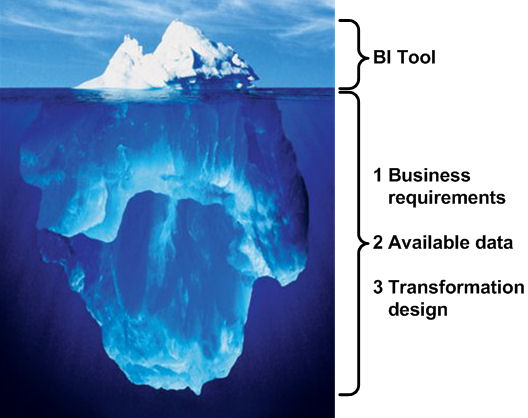
My experience is that while having a snazzy BI tool (Cognos PowerPlay being the one I have most often used) in place can win you plaudits, this is only because it is sitting on top of a warehouse that embodies the business information that the organisation needs. The four keys to a successful BI implementation are: –
Forming a deep understanding of the key business questions that need to be answered.
Piecing together the various elements of corporate data that relate to these questions (assuming that they exist) and establishing how they are linked together.
Working out how to transform the data to meet the questions.
The above steps (which are typically iterative) form the foundation of a BI initiative that actually adds value. If you have followed them assiduously, then whatever front-end tool you choose, your users will like what they see*. You can argue about the precise figures, but 80-90% of your overall development project will relate to the three steps above and only 10-20% to layering a BI tool on top of your data.
When I presented at the Informatica World 2005 in Washington, DC I tweaked Thomas Alva Edison’s famous aphorism to suggest that: –
Business intelligence is 10% presentation and 90% integration.
Taking my admitted cheesiness to one side, I stand by this observation.
* Before I am accused of being agnostic about different BI tools, I should stress that they are not all the same, some are better than others and it is worth putting in the effort to pick the right one for your organisation. Instead my point is that if you do not have the correct data and business foundations, it is irrelevant how good your BI tool is. Equally, if you do have these underpinnings in place, then most BI tools will at least be adequate.
I am collaborating with Chase Zander to set up an IT Directors’ Forum for later in the year. Rather than focussing on technology issues, our idea is to focus on the nexus between IT and business, something that I am obviously interested in given my background.
In the IT and change projects I have led, I always prided myself on going an extra mile to understand user requirements. One way in which the group of us organising the seminar is trying to get such user feedback is from LinkedIn.com and specifically the CIO Magazine group (you will need to be a member of LinkedIn.com and the group to view this).
The question that I posed there is as follows: –
I’m looking for business-focussed topics for a CIO / IT Director forum that I am helping to arrange. I would be very interested in what areas are at the top of people’s priority lists.
The forum is for senior IT people, but it is not going to be focussed on technology (there are enough SOA seminars out there already). Instead possible areas would include:
Managing the ever increasing pace of business change
IT / Business alignment; IT Governance / prioritisation
Managing IT in the current economic climate
The interplay between IT strategy and shorter-term tactics
Increasing the influence of IT at the board level.
Of course some of these overlap. The seminar is meant to be a forum for discussion between delegates, not just presentations. If you were to go to such an event, what topics would you like to discuss? Thank you in advance for your help.
Peter
There has been a lot of very interesting feedback to this question, showing once more how helpful the on-line community can be in addressing issues.
UPDATE: The results of this survey are now available and may be viewed here.